Minimally Invasive Knee Replacement
What is Minimally Invasive Knee Replacement?
Minimally invasive knee replacement is an advanced surgical technique designed to relieve chronic knee pain while preserving as much healthy muscle, soft tissue, and bone as possible. Using a smaller incision and specialized surgical methods, the procedure reduces tissue disruption, supports faster recovery, and helps patients return to their daily activities with greater comfort and confidence.
At the Dr. Samih Tarabichi Center, every minimally invasive knee replacement is planned around the individual patient. Rather than following a one-size-fits-all approach, the procedure considers each patient’s knee anatomy, lifestyle, functional goals, and degree of arthritis to achieve the best possible outcome.
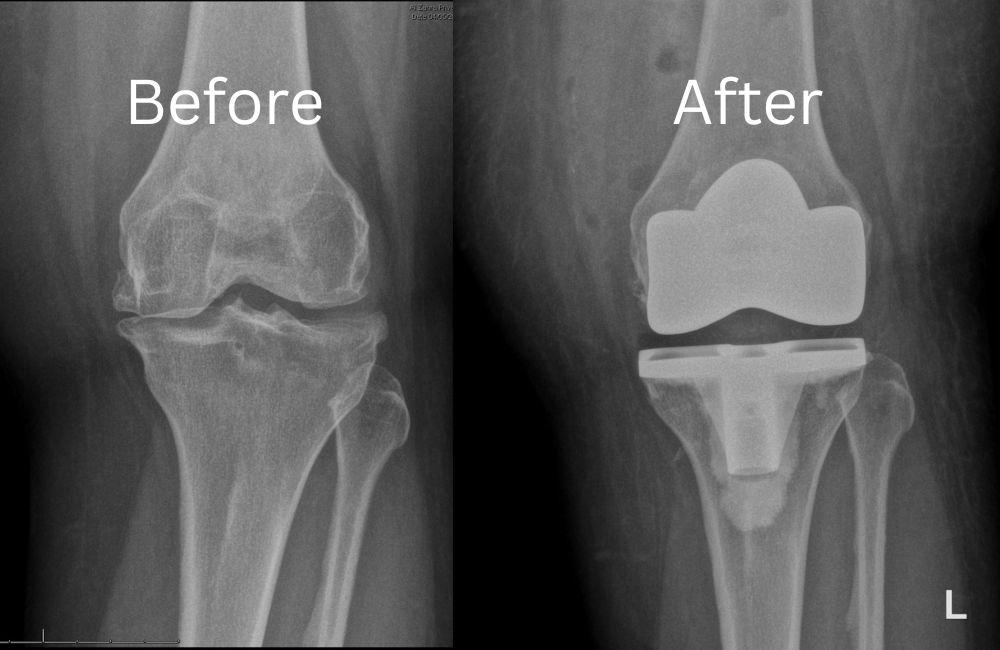
Dr. Samih Tarabichi’s minimally invasive surgical philosophy is built on more than three decades of clinical experience and extensive scientific research in knee arthroplasty. His peer-reviewed publications have advanced the understanding of knee biomechanics, anatomical variation, implant design, high-flexion knee replacement, and surgical techniques that optimize range of motion and long-term function. This evidence-based approach enables personalized surgical planning that restores natural knee movement, improves joint stability, and supports durable clinical outcomes.
Today, patients from the UAE, the Middle East, and around the world seek Dr. Tarabichi’s expertise not only for his minimally invasive techniques but also for his research-driven approach to modern knee replacement surgery. By combining advanced surgical technology, personalized implant selection, and internationally published clinical research, the goal is to deliver a safer procedure, a smoother recovery, and a knee that performs naturally in everyday life.
Dr Samih Tarabichi Research Foundation
| Scientific Focus | Clinical Benefit |
|---|---|
| Knee biomechanics | Restores natural joint movement and stability |
| Knee morphology research | Helps tailor implant selection to individual anatomy |
| Evidence-based surgical planning | Supports precise implant positioning and soft tissue balancing |
| Long-term functional outcomes | Aims to maximize mobility, comfort, and implant longevity |
Who Is a Candidate for Minimally Invasive Knee Replacement?
Minimally invasive knee replacement may be recommended for patients whose knee pain and joint damage significantly affect their quality of life and daily activities. The decision to proceed with surgery is based on several factors, including the severity of arthritis, functional limitations, response to non-surgical treatments, overall health, and the patient’s expectations after surgery.
Patients who may benefit from knee replacement commonly experience:
- Persistent knee pain that interferes with walking, standing, or daily activities
- Pain that continues despite treatments such as medication, injections, or physiotherapy
- Increasing stiffness and reduced knee movement
- Difficulty performing normal activities because of loss of knee function
- Progressive knee deformity caused by advanced arthritis
Age alone does not determine whether a patient is suitable for knee replacement. A patient’s physical condition, activity requirements, knee anatomy, and desired level of function are important considerations when planning surgery.
For patients in the Middle East and Asia, understanding lifestyle and functional requirements is particularly important. In his publication “Posterior Cruciate Ligament Substituting Total Knee Arthroplasty: Considerations in the Middle East,” Dr. Samih Tarabichi highlighted the importance of considering regional patient characteristics and activity demands when planning knee replacement procedures. Similarly, his work on “Special Considerations in Asian Knee Arthroplasty” emphasized that anatomical variations, cultural activities, and expectations for postoperative mobility should be considered when selecting implants and surgical strategies.
Activities that require greater knee motion, such as kneeling, squatting, sitting on the floor, or performing religious and cultural activities, may influence surgical planning and rehabilitation goals. Therefore, the evaluation process focuses not only on treating arthritis but also on restoring the level of function that is important to each individual patient.
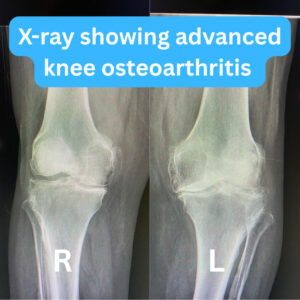
A comprehensive assessment, including clinical examination and appropriate imaging, helps determine whether minimally invasive knee replacement is suitable and allows the surgical plan to be tailored according to the patient’s condition and functional goals.
Is Minimally Invasive Knee Replacement Suitable for Specific Age?
There are no strict age or weight restrictions for minimally invasive knee replacement. Instead, surgeons base decisions on pain level and functional limitation.
Typically, most patients fall between 50 and 80 years old. However, surgeons assess each case individually. As a result, successful procedures have been performed on both younger and older patients.
What Are the Preparation Steps?
The preparation process includes a detailed assessment of the patient’s medical history, knee condition, current medications, and overall health status. Appropriate imaging studies are reviewed to evaluate the extent of joint damage, alignment, and the condition of the surrounding structures of the knee.
Patients may undergo several preoperative assessments, including:
- Medical evaluation to identify and optimize any existing health conditions
- Anesthesia assessment to determine the safest anesthesia plan
- Blood tests and routine investigations required before surgery
- Review of current medications and any necessary adjustments before the procedure
Consequently, the team ensures that the procedure can be performed safely.
How is Minimally Invasive Knee Replacement Performed?
Minimally invasive knee replacement is a precise surgical procedure that replaces the damaged surfaces of the knee joint while aiming to preserve surrounding soft tissues and support faster functional recovery.
During the procedure, the surgeon:
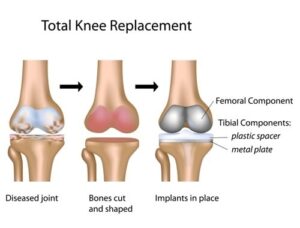
- Removes damaged cartilage and worn bone surfaces from the knee joint.
- Prepares the femur and tibia to receive the implant components.
- Places the artificial femoral and tibial components.
- Inserts a medical-grade polyethylene spacer to recreate smooth joint movement.
- Balances the surrounding ligaments and soft tissues to achieve knee stability and proper function.
The success of knee replacement depends on restoring the natural mechanics of the knee, not only replacing damaged surfaces. Dr. Samih Tarabichi’s research on “The Biomechanics of the Knee Joint” highlights the importance of understanding knee movement, joint forces, and anatomical relationships when designing and performing knee arthroplasty procedures.
Surgical Techniques to Improve Knee Movement
Achieving good postoperative mobility requires careful attention to surgical technique, implant positioning, and soft tissue management.
Dr. Tarabichi’s published research has investigated techniques that may help improve range of motion after knee replacement, including:
- Soft tissue management techniques: In “Can an Anterior Quadriceps Release Improve Range of Motion in the Stiff Arthritic Knee,” Dr. Tarabichi evaluated anterior quadriceps release as a surgical technique for selected patients with stiff arthritic knees and limited mobility.
- Optimizing surgical steps for range of motion: In “Operative Procedure for Primary TKR: How to Increase ROM,” Dr. Tarabichi described operative principles focused on improving postoperative knee movement through careful surgical planning and technique.
The procedure usually takes approximately one hour, although the total surgical time may vary depending on each patient’s condition and surgical requirements.
Following surgery, patients begin a structured rehabilitation program designed to restore knee movement, strength, and confidence while progressing toward their functional goals.
Which Knee Implant Systems Are Used?
The choice of knee implant is an important part of achieving a successful knee replacement outcome. Implant selection is based on several factors, including the patient’s anatomy, ligament condition, activity requirements, degree of arthritis, and expected level of function after surgery.
At Dr. Samih Tarabichi Center, available implant options may include:
- Total Knee Replacement Implants
- Used when arthritis affects multiple compartments of the knee and the joint surfaces require complete replacement.
- Partial Knee Replacement Implants
- Considered for selected patients where damage is limited to a specific compartment of the knee and the remaining structures are healthy.
- 3D Printed Patient-Specific Knee Implants
- Advanced imaging technology, including CT-based planning, can be used to create implants designed according to an individual’s knee anatomy.
Successful knee replacement requires an understanding that every knee has unique anatomical characteristics. In his publication “A Comprehensive Evaluation of Knee Morphology in Designing Arthroplasties of Knee,” Dr. Samih Tarabichi examined variations in knee anatomy and their importance in designing and selecting appropriate knee arthroplasty solutions.
Dr. Tarabichi has also contributed to implant innovation through his work “Hybrid BCR-TKA: A Novel Proposed Tibial Design,” which explored a proposed tibial component concept aimed at improving implant design considerations in total knee arthroplasty.
The goal of modern implant selection is not simply to replace the damaged joint but to achieve a stable, functional knee that matches the patient’s anatomy and lifestyle requirements.
All artificial knee implants available at our center are designed and manufactured to allow full flexion, similar to human joint.
What is the recovery period after the minimally invasive knee replacement?
Recovery after minimally invasive knee replacement is a progressive process focused on restoring knee movement, strength, independence, and confidence. The recovery experience differs between patients depending on factors such as preoperative mobility, overall health, age, muscle strength, and commitment to rehabilitation.
Typical Recovery Timeline After Knee Replacement
- Immediately after surgery
- Patients are encouraged to begin safe movement and rehabilitation as early as appropriate under the supervision of the medical team.
- Early mobility helps support circulation, reduce stiffness, and begin restoring knee function.
- First month after surgery
- Rehabilitation focuses on improving knee range of motion, reducing swelling, strengthening the muscles around the knee, and gradually increasing walking ability.
- Physiotherapy plays an essential role in helping patients regain mobility and confidence.
- Second and third months after surgery
- Many patients experience significant improvements in muscles pain, mobility, and daily activities during this period.
- Continued exercises help improve strength, flexibility, and overall knee function.
- Long-term recovery
- The knee continues to adapt and improve over several months as muscles strengthen and patients return gradually to their normal activities.
Factors That Support Successful Recovery
A successful recovery after knee replacement depends on several important factors:
- Accurate surgical technique and implant positioning
- Effective rehabilitation and physiotherapy
- Proper wound management
- Patient commitment to recommended exercises and activity progression
Modern wound management is an important part of the recovery journey. In his publication “From Incision to Recovery: Advances and Challenges in Wound Closure After Total Knee Arthroplasty,” Dr. Samih Tarabichi reviewed advances and challenges in wound closure techniques after knee replacement surgery, highlighting the importance of effective wound management in supporting healing and reducing postoperative complications.
Restoring knee movement is another important goal after surgery. Dr. Tarabichi’s work “Operative Procedure for Primary TKR: How to Increase ROM” discussed surgical principles that may help optimize postoperative range of motion through careful operative technique and management of factors affecting knee mobility.
With appropriate surgical planning, rehabilitation, and follow-up care, minimally invasive knee replacement aims to help patients return to meaningful daily activities and improve their quality of life.
Robotic and Artificial Intelligence Systems: Available, Dr. Tarabichi uses robotic and AI technology when needed or requested by the patient.
What About the Pain Management?
Managing pain effectively after knee replacement surgery is an important part of recovery. Modern knee replacement care uses a multimodal approach that combines different strategies to reduce discomfort, support early mobility, and help patients participate effectively in rehabilitation.
Pain management after minimally invasive knee replacement include:
- Preoperative pain planning
- Assessment of the patient’s medical history helps develop an appropriate pain control strategy before surgery.
- Multimodal pain management
- A combination of medications and techniques is used to target pain through different pathways, reducing reliance on any single method.
- Anesthesia techniques
- Spinal anesthesia and other anesthesia approaches may be used according to the patient’s condition and surgical plan to improve comfort during and after the procedure.
- Cryo-neurolysis for postoperative pain control
- Dr. Samih Tarabichi’s publication “Enhanced Pain Management in Total Knee Arthroplasty: A Retrospective Analysis on Intraoperative Cryo-Neurolysis” evaluated the role of intraoperative cryo-neurolysis as part of pain management strategies in total knee arthroplasty, highlighting its role in improving postoperative pain control.
- Surgical techniques focused on knee function
- The management of structures around the knee can influence postoperative comfort and function. In “BEFIT Patelloplasty in TKA: A Targeted Approach to Improve Pain and Function,” Dr. Tarabichi presented a targeted approach to patellar management in total knee arthroplasty with the aim of improving pain and functional outcomes.
- Optimizing surgical technique
- Surgical factors can also influence recovery. Dr. Tarabichi’s research comparing tourniquet versus tourniquet-less techniques in total knee arthroplasty examined the effect of different surgical approaches on postoperative outcomes and recovery considerations.
Effective pain management is not only about reducing discomfort; it is also essential for enabling early movement, successful rehabilitation, and a smoother recovery after knee replacement surgery.
What About the Follow Up Visits?
Follow-up care ensures long-term success. Therefore, the center provides a structured schedule:
- One week after discharge
- Monthly visits for three months
- Annual evaluations
During these visits, the team conducts clinical assessments and imaging tests. In addition, they evaluate daily activity performance.
What About Rehabilitation After the Minimally Invasive Knee Replacement?
Rehabilitation plays a vital role in achieving full recovery, therefore we established a comprehensive rehabilitation center for you
Specialized therapists guide patients through customized programs. These programs focus on restoring strength, flexibility, and mobility.
Furthermore, advanced rehabilitation equipment supports faster progress. As a result, patients regain pain-free movement efficiently.
What to Expect after the minimally invasive knee replacement?
"Realistic activities following minimally invasive knee replacement include unlimited walking, swimming, golf, driving, light hiking, biking, ballroom dancing, and other low-impact sports"
The Video from the AAOS youtube channel
Frequently Asked Questions about Minimally Invasive Knee replacement Surgery
Implant shape affects how well the component fits the bone while maintaining appropriate alignment. A study co-authored by Dr. Samih Tarabichi compared six tibial component designs using 479 tibiae. The anatomical design provided better bone coverage and rotational alignment than the non-anatomical designs studied. This supports careful matching of implant geometry to knee anatomy; the study evaluated anatomical fit rather than proving superior patient recovery. Read the study
Deep knee bending is achievable for some patients. In Achieving Deep Flexion After Primary Total Knee Arthroplasty, Dr. Samih Tarabichi and colleagues reported average knee flexion of approximately 140° at five years among the knees assessed at that follow-up. The study examined a particular high-flexion implant and surgical approach in Asian and Middle Eastern patients. These findings demonstrate what can be achieved in selected patients, rather than guaranteeing the same movement for everyone. Read the study
In selected cases, yes. Research co-authored by Dr. Samih Tarabichi examined a stepwise soft-tissue balancing technique in 105 knees with fixed bow-legged deformity. All were balanced during surgery without releasing the superficial medial collateral ligament, an important stabilizer on the inner side of the knee. Other tight tissues were addressed as needed. The findings support a ligament-preserving approach in the cases studied, with the surgical plan tailored to each knee. Read the study
Yes, addressing tissues that restrict movement can improve knee bending in selected cases. Dr. Samih Tarabichi and Yasir Tarabichi studied 42 quadriceps releases in 24 patients with advanced knee arthritis. Releasing adhesions around the quadriceps improved passive flexion by an average of 32.4° immediately during surgery. This was an intraoperative measurement, not a prediction of final recovery, but it highlights why soft-tissue assessment matters alongside implant placement. Read the study
Not necessarily. Bicruciate-retaining knee replacement preserves both the anterior and posterior cruciate ligaments. The review available in Dr. Tarabichi’s publication collection describes potential benefits for knee movement and joint awareness, but also challenges with implant fixation, ligament balancing and surgical complexity. Preserving both ligaments alone does not establish that an implant will produce better results for every patient. Read the BCR knee-replacement review.
Yes, in selected cases. Patelloplasty reshapes the natural kneecap rather than replacing its joint surface with a prosthetic component. A study co-authored by Dr. Samih Tarabichi followed 408 patients undergoing knee replacement with this approach and reported improvements between three and six months. However, it had no comparison group, so it does not establish that patelloplasty is superior to kneecap resurfacing. Read the patelloplasty study.
Intraoperative cryo-neurolysis uses targeted cold to temporarily interrupt pain signals from selected nerves. Dr. Samih Tarabichi and colleagues studied this approach in 34 knee-replacement patients, reporting a decrease in median pain scores from 2 on the first postoperative day to 0 at three months. The results are encouraging, but the study had no comparison group, so it cannot establish how much improvement came from cryo-neurolysis rather than normal recovery and other pain treatments. Read the study
Not necessarily. An international expert report co-authored by Dr. Samih Tarabichi supports leaving suitable surgical dressings undisturbed when clinically appropriate. The timing depends on the wound, dressing and your surgeon’s instructions. A soaked dressing, excessive bleeding, suspected infection or wound opening requires prompt contact with your surgical team. This publication provides expert guidance rather than results from a comparative clinical trial. Read the incision-care publication.
The references:
- Surgical Management of Osteoarthritis of the Knee: Evidence-Based Clinical Practice Guideline. American Academy of Orthopaedic Surgeons (AAOS). 2022.
- Achieving Deep Flexion After Primary Total Knee Arthroplasty. Tarabichi Samih, Tarabichi Y, Hawari M. The Journal of Arthroplasty. 2010. DOI: 10.1016/j.arth.2008.11.013.
- Can an Anterior Quadriceps Release Improve Range of Motion in the Stiff Arthritic Knee? Tarabichi Samih, Tarabichi Y. The Journal of Arthroplasty. 2010;25(4):571–575. DOI: 10.1016/j.arth.2009.04.015.
- Comparing the Effect of Tourniquet vs Tourniquet-Less in Simultaneous Bilateral Total Knee Arthroplasties. Hasanain MS, Apostu D, Alrefaee A, Tarabichi Samih. The Journal of Arthroplasty. 2018;33(7):2119–2124. DOI: 10.1016/j.arth.2018.02.013.
- Anatomic Tibial Component Design Can Increase Tibial Coverage and Rotational Alignment Accuracy: A Comparison of Six Contemporary Designs. Dai Y, Scuderi GR, Bischoff JE, Bertin K, Tarabichi Samih, Rajgopal A. Knee Surgery, Sports Traumatology, Arthroscopy. 2014;22:2911–2923. DOI: 10.1007/s00167-014-3282-0.
- BCR TKA Designs: A Systematic Review of the Literature.
- Enhanced Pain Management in Total Knee Arthroplasty: A Retrospective Analysis on Intraoperative Cryo-Neurolysis. Elfekky M, Alsultan A, Adi MM, Aburezeq MNAA, Rajaeirad M, Tarabichi Samih. Journal of Orthopaedic Experience & Innovation. 2025. DOI: 10.60118/001c.136350.
- Befit Patelloplasty in TKA: A Targeted Approach to Improve Pain and Function. Elfekky M, et al. Journal of Orthopaedic Experience & Innovation. 2025;6(2). DOI: 10.60118/001c.141826.
- From Incision to Recovery: Advances and Challenges in Wound Closure After Total Knee Arthroplasty. Elfekky M, Tarabichi Samih. Journal of Orthopaedic Experience & Innovation. 2026;7(1). DOI: 10.60118/001c.146307.
Have a Question or Need an Appointment?
For appointments or inquiries regarding your treatment with Dr. Samih Tarabichi, kindly submit your inquiry below.