Minimally Invasive Hip Replacement
What is Minimally Invasive Hip Replacement?
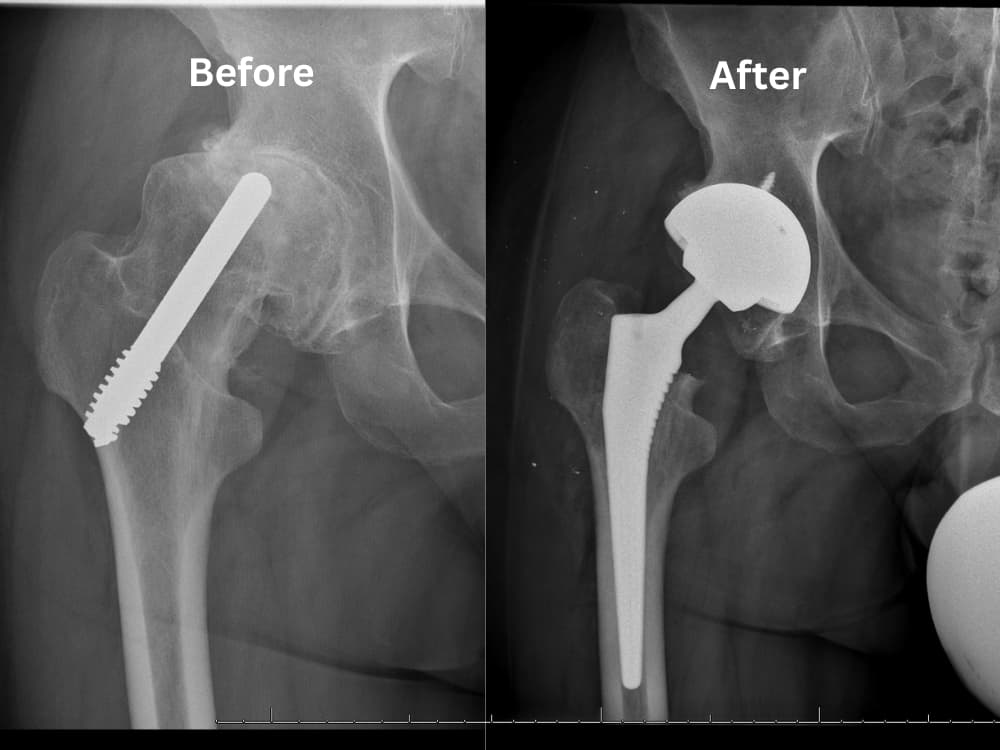
Minimally invasive hip replacement is a modern surgical approach that replaces only the damaged hip joint surfaces while preserving healthy surrounding tissues. The surgeon performs the procedure through a small incision of approximately 8–12 cm (3–5 inches). As a result, muscle disruption is minimized and recovery becomes faster. Dr. Samih Tarabichi has refined and advanced this technique over many years of clinical expertise. Importantly, it avoids cutting major muscles and tendons. This helps maintain the hip’s natural biomechanics. During the procedure, the surgeon carefully removes damaged joint surfaces. Then, they replace them with a new joint made of advanced titanium and medical-grade ceramic materials. An artificial cartilage layer is also inserted to restore smooth movement. This joint design offers high durability and long-term performance. In many cases, it lasts longer than conventional implants while providing pain-free mobility. Finally, the incision is closed using specialized techniques. Therefore, healing accelerates and early mobility becomes possible. Overall, this approach ensures precision, durability, and faster recovery. It also sets a new standard in modern hip arthroplasty.
When is Minimally Invasive Hip Replacement Recommended?
Dr. Tarabichi may recommend minimally invasive hip replacement when symptoms significantly affect daily life.
Patients who benefit most often experience:
- Severe hip pain or stiffness that limits walking, climbing stairs, or daily movement
- Difficulty walking even short distances without discomfort
- Dependence on a cane or walker
- Persistent pain during rest, day or night
- Chronic inflammation that does not improve with medication or rest
- Hip deformity or reduced range of motion affecting posture and balance
- Limited improvement after physiotherapy, injections, or medications
Therefore, early consultation helps determine the best treatment pathway.
Is Minimally Invasive Hip Replacement suitable for Specific Age?
There are no strict age or weight restrictions for hip replacement surgery. Instead, surgeons base decisions on pain level and functional limitation.
Most patients fall between 50 and 80 years old. However, Dr. Tarabichi evaluates each patient individually. As a result, successful procedures have been performed across all age groups.
What are the preparation steps ?
Before surgery, the patient undergoes a comprehensive medical evaluation.
First, an internal medicine specialist assesses overall health. Then, an anesthesiologist evaluates surgical readiness. In addition, laboratory tests analyze vital body functions.
Consequently, the team ensures the procedure can be performed safely.
How Minimally Invasive Hip Replacement Performed ?
The procedure includes three key steps:
- Prepare the joint: The surgeon removes damaged cartilage and worn surfaces from the hip joint
- Position the implants: The surgeon places titanium and ceramic components to recreate the natural joint
- Insert the liner: A medical-grade liner ensures smooth movement and reduces friction
As a result, the hip regains stable and natural function.
Which Hip Implant Systems are Available ?
Dr. Samih Tarabichi uses advanced hip implant systems available worldwide. These implants are made from biocompatible materials and show no reported rejection cases.
Each patient receives a tailored solution based on their condition and bone quality.
At Dr. Tarabichi’s Center for Joint Care, all available options are offered to ensure optimal outcomes.
Available systems include:
- Cementless Hip Replacement: Ideal for patients with strong bone structure; supports natural bone growth onto the implant
- Cemented Hip Replacement: Suitable for patients with osteoporosis; provides immediate stability using medical cement
- Custom 3D Hip Replacement: Uses precise imaging to create a patient-specific implant manufactured in Switzerland
All systems are designed to closely replicate the natural human joint.
Robotic and Artificial Intelligence Systems: Available in the operating rooms, Dr. Tarabichi uses robotic and AI technology as needed or as requested by the patient.
What About the Pain Management?
Pain management plays a critical role in recovery. However, the team ensures safe and effective control without dependency risks.
Before surgery:
The team prescribes suitable medications based on medical history. Additionally, cryotherapy targets specific nerves to reduce pain during recovery.
During surgery:
The team uses spinal anesthesia with sedation. As a result, the patient remains comfortable with minimal systemic impact.
After surgery:
A PCA pump allows the patient to control pain medication. Meanwhile, the medical team monitors progress and adjusts treatment accordingly.
What About the Surgical Procedure and Recovery Timeline ?
The surgery typically takes about one and a half hours. In addition, preparation time in the operating room lasts approximately one hour.
After surgery, the patient moves to the recovery room for monitoring. Subsequently, they are transferred to their hospital room or ICU if required.
Most patients begin walking with assistance the next day. In some cases, patients walk within hours after surgery.
The hospital stay usually ranges from four to seven days. During this period, the medical team monitors recovery and adjusts medications as needed.
After discharge, patients receive detailed instructions for wound care and physiotherapy. Therefore, recovery continues smoothly at home.
What About the Follow Up Visits?
Follow-up care ensures long-term success. Therefore, the center provides a structured plan:
- One week after discharge
- Monthly visits for three months
- Annual evaluations
During these visits, the team performs clinical assessments and imaging studies. In addition, they evaluate daily activities such as walking and mobility.
What About Rehabilitation After Minimally Invasive Hip Replacement ?
Rehabilitation is essential for full recovery. Therefore we established a comprehensive rehabilitation center for you.
Specialized therapists guide patients through customized programs that restore strength, flexibility, and mobility.
Furthermore, advanced rehabilitation equipment supports faster progress. As a result, patients regain pain-free movement in the shortest time possible.
What to Expect after the minimally invasive Hip replacement?
"Realistic activities following minimally invasive knee replacement include unlimited walking, swimming, golf, driving, light hiking, biking, ballroom dancing, and other low-impact sports"
The Video from the AAOS youtube channel
Frequently Asked Questions about Minimally Invasive Knee replacement Surgery
A. The patient has to pay attention to infections in the first year following the surgery.
Any surgeries performed shall be accompanied with wide-range antibiotics before and
after the surgery, even when it comes to dentistry. Also, the patient has to treat any
infections in the first year with wide-range antibiotics, to avoid any infection that will
spread to the joints.
A. Most patients are elderly, and many operations were performed for patients above 80 and 90 years successfully, while assuring their readiness to surgery before performance.
A. Most patients who suffer from chronic diseases such as diabetes & heart diseases have had surgeries performed successfully after referring them to the specialized physician for screening to obtain his approval for the surgery and 90 years successfully, while assuring their readiness to surgery before
performance.
A. Obesity complicates surgery, yet surgeries were successfully performed for patients who are above 100-140kg. It is rather challenging to ask the patient to lose weight, as his/her weight may increase difficulties in movement and cause decreased activity after surgery have had surgeries performed successfully after referring them to the specialized physician for screening to obtain his approval for the surgery and 90 years successfully, while assuring their readiness to surgery before performance.