Minimally Invasive ACL Reconstruction
What is Minimally Invasive ACL Reconstruction ?
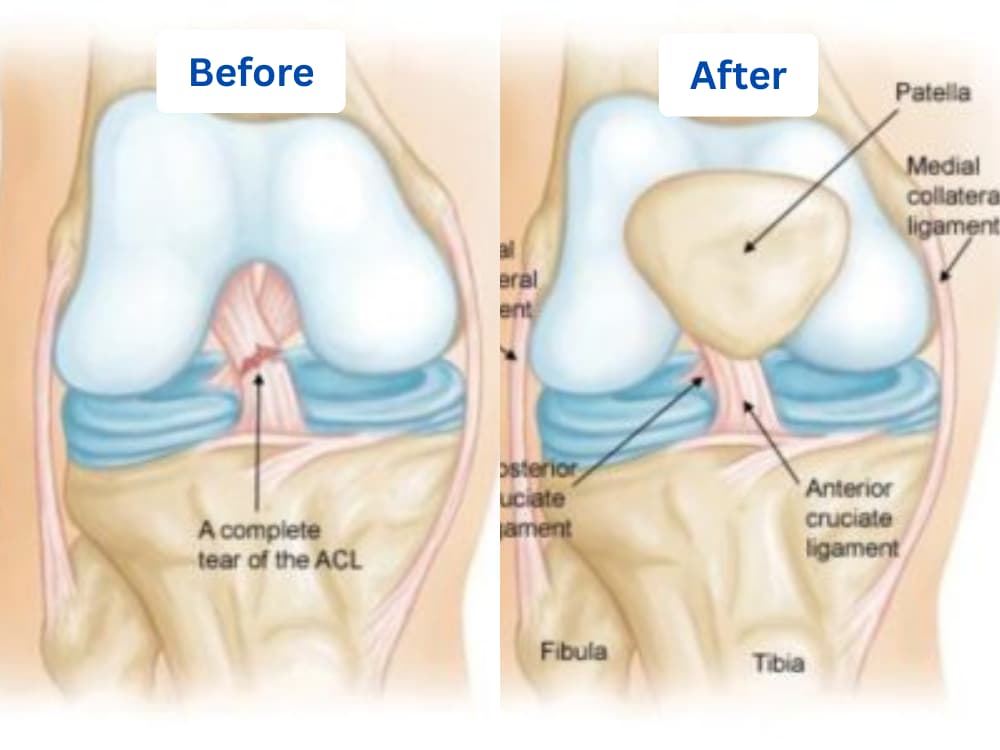
Minimally invasive ACL reconstruction is an advanced surgical procedure that restores knee stability by replacing the torn anterior cruciate ligament (ACL) with a new graft. It also preserves healthy surrounding tissues. The surgeon performs the procedure through small keyhole incisions. As a result, tissue trauma is minimized and recovery becomes faster. Dr. Samih Tarabichi has refined and perfected this technique over more than two decades. Importantly, it avoids extensive muscle disruption and maintains the knee’s natural biomechanics. During surgery, the surgeon removes the damaged ligament. Then, they replace it with a strong biological graft. The graft is positioned precisely to replicate the natural ACL function and restore joint stability. Finally, the incisions are closed using specialized techniques. Therefore, healing accelerates and early rehabilitation becomes possible. Overall, this approach delivers precision, durability, and a faster return to sports and daily activities. It sets a new benchmark in modern ligament reconstruction.
When the Minimally Invasive ACL Reconstruction is recommended?
Dr. Tarabichi may recommend ACL reconstruction when knee stability is significantly affected.
Patients who benefit most often experience:
- Knee instability or a sensation of the knee “giving way” during movement
- Persistent pain, swelling, or stiffness after an ACL injury
- Difficulty returning to sports or physical activities
- Reduced knee strength and control
- Repeated injuries or cartilage damage due to instability
- Limited improvement after physiotherapy, bracing, or medications
Therefore, early evaluation helps prevent further joint damage.
Is Minimally Invasive ACL Reconstruction suitable for Specific Age?
There are no strict age or weight limitations for ACL reconstruction. Instead, the decision depends on knee stability, functional limitation, and activity goals.
ACL reconstruction is commonly performed in adolescents, young adults, and active individuals. However, surgeons evaluate each case individually.
Successful procedures have been performed across all age groups. These include young athletes and older patients who remain physically active.
The primary goal is to restore stability, prevent further damage, and support a safe return to daily activities and sports.
What are the preparation steps ?
Before surgery, the patient undergoes a comprehensive medical evaluation.
First, an internal medicine specialist assesses overall health. Then, an anesthesiologist evaluates surgical readiness. In addition, laboratory tests examine vital body functions.
As a result, the team ensures the procedure can be performed safely.
How Minimally Invasive ACL Reconstruction done?
The procedure involves three key steps:
- Prepare the knee: The surgeon removes the damaged ACL and clears loose tissue while preserving healthy structures
- Create and position the graft: The surgeon creates small tunnels in the femur and tibia, then positions a biological graft to replicate the natural ACL
- Secure the new ligament: The surgeon fixes the graft using advanced devices to ensure stability and proper integration
As a result, the knee regains controlled and stable movement.
Robotic and Artificial Intelligence Systems: Available in the operating rooms, Dr. Tarabichi uses robotic and AI technology when needed or requested by the patient.
What About the Surgical Procedure and Recovery Period?
ACL reconstruction surgery typically takes about one hour. In addition, preparation in the operating room takes approximately one hour.
After surgery, the patient moves to the recovery room for close observation. This stage usually lasts about one hour before transfer to a hospital room if needed.
Most patients begin gentle movement on the same day or the following day. They use crutches or a knee brace for support.
The hospital stay is usually short. Many cases are performed as day surgery or require only one overnight stay.
After discharge, patients receive detailed instructions on wound care, pain management, and physiotherapy. Therefore, recovery continues in a structured and controlled manner.
With consistent rehabilitation, patients gradually regain strength, stability, and mobility. Over time, they return safely to daily activities and sports.
What About Rehabilitation After the Surgery?
Rehabilitation plays a critical role in recovery. It supports the restoration of strength, stability, and full knee function. Therefore we established a comprehensive rehabilitation center for you
Specialized physiotherapists supervise a structured program tailored to each patient. This program focuses on individual condition, mobility goals, and activity level.
Patients are strongly encouraged to commit fully to their rehabilitation plan. Consistency is essential for optimal outcomes.
The rehabilitation program uses advanced physiotherapy technologies and training tools. It focuses on improving muscle strength, ligament flexibility, joint stability, and balance.
As a result, patients regain confidence, performance, and pain-free movement safely and efficiently.
What to Expect after the minimally invasive ACL Reconstruction?
"Realistic activities following the surgery include unlimited walking, swimming, golf, driving, light hiking, biking, ballroom dancing, and other low-impact sports"
The Video from the AAOS youtube channel
Frequently Asked Questions about Minimally Invasive Knee replacement Surgery
Initial recovery usually takes a few weeks, during which swelling decreases and basic movement improves. Most patients return to daily activities within 4–6 weeks. Full recovery, including return to sports, typically takes 6–9 months depending on rehabilitation progress and individual healing.
ACL reconstruction provides long-lasting knee stability for most patients when combined with proper rehabilitation. The graft becomes integrated into the body over time, functioning like a natural ligament. Maintaining strength and following activity guidelines helps ensure durability.
Low-impact activities can usually resume within a few months. High-impact or pivoting sports typically require 6–9 months of rehabilitation and medical clearance to ensure the knee is strong and stable enough for safe return.
In most cases, the new ACL is created using a graft taken from the patient’s own tissue (such as the hamstring or patellar tendon). In some situations, a donor graft may be used. Dr. Tarabichi selects the most suitable option based on the patient’s age, activity level, and knee condition to ensure optimal strength and long-term stability.